Mastering anesthesiology requires a strong foundation in pharmacology, physiology, and practical clinical skills. Whether you are preparing for postgraduate exams or building daily clinical confidence, having the right reference books and study materials is critical for success.
Top Recommended Anesthesia Textbooks
Table of Contents
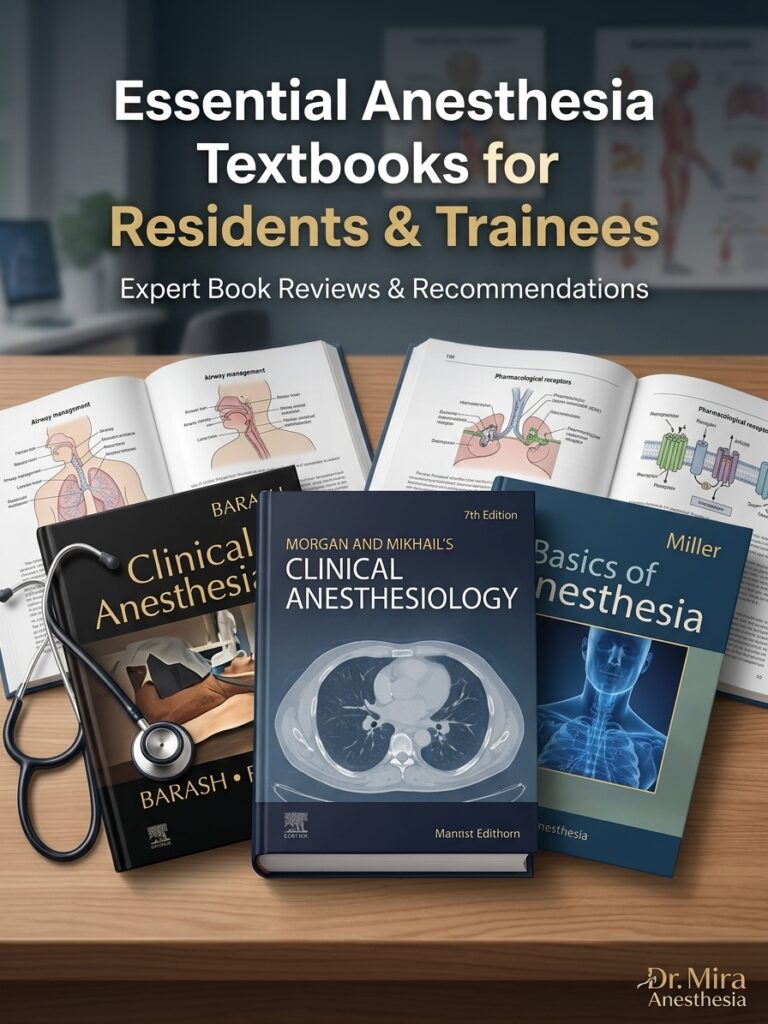
- Clinical Anesthesiology (Barash) A comprehensive gold-standard reference covering fundamental principles, subspecialty anesthesia, and clinical management.
- Morgan and Mikhail’s Clinical Anesthesiology Concise, well-structured, and easy to read. It is ideal for quick clinical reference and exam preparation.
- Basics of Anesthesia (Miller) An essential guide that simplifies complex physiological and pharmacological concepts for residents and students.
Must-Have Practical Tools & Accessories
- Medical Stethoscope for Clinical Practice A high-quality stethoscope is essential for reliable airway assessment, lung sound evaluation, and hemodynamic monitoring.
- Anesthesia Pocket Reference Cards & Guides: Quick-reference pocket guides help with drug dosage calculations, airway algorithms, and emergency checklists during operative care.
Why the Right Anesthesia Books Matter for Residents
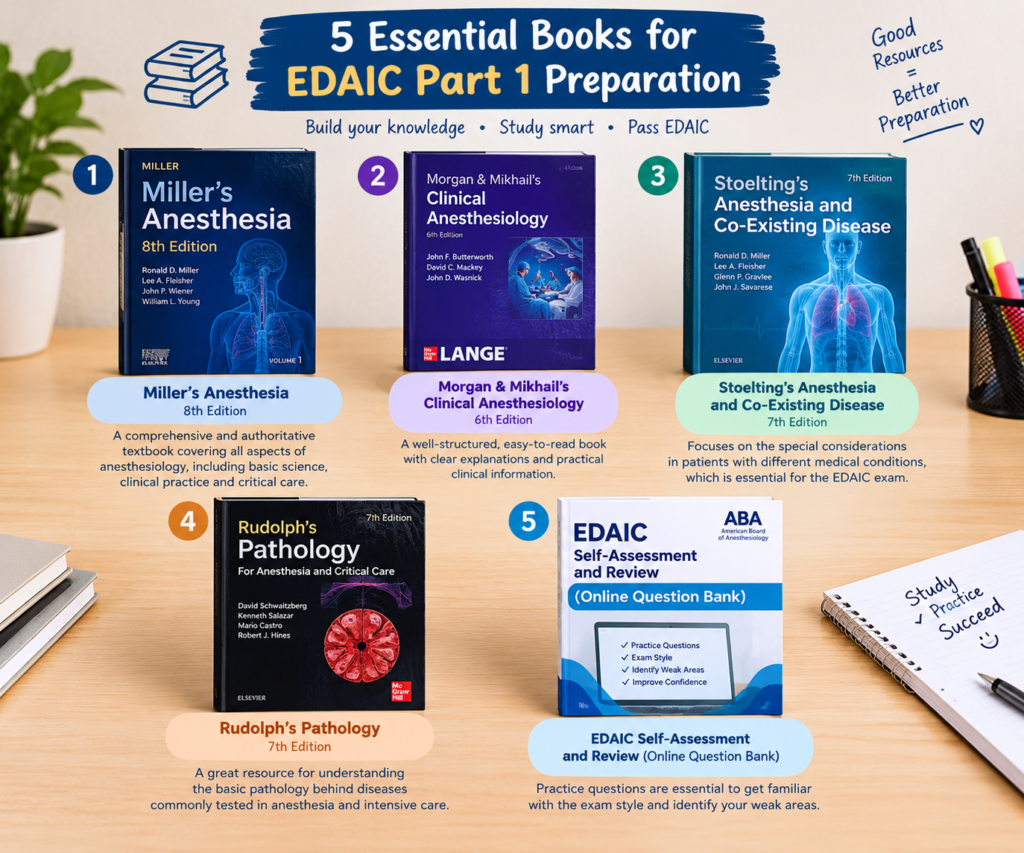
Choosing the right anesthesia books early in training saves months of confusion. Residents and trainees face a huge amount of material: physiology, pharmacology, regional techniques, critical care and exam preparation. A well-chosen textbook gives you one trusted source to return to during rotations, on call and in the weeks before your board exam. This guide compares five essential anesthesia books and one daily-use clinical tool, so you can decide quickly what fits your stage of training.
How to Choose an Anesthesia Textbook
Before you buy, think about how you will use the book. A single title will rarely cover every need, so match the book to your goal:
- Daily clinical reference: pick a concise book you can open in minutes before a case.
- Exam preparation: look for clear chapters, key points and a structure that supports revision.
- Deep understanding: a large reference text is better when you need the full explanation of a topic.
- Specific weak areas: choose a focused book for pharmacology or for medical diseases and anesthesia.
First-year residents usually benefit from a readable, condensed book. Senior residents and board candidates often add a comprehensive reference for in-depth study.
Why Every Resident Also Needs a Good Stethoscope
Books build knowledge, but a reliable stethoscope supports every shift in the operating room, ICU and wards. Good acoustic performance helps with breath sounds, heart sounds and bedside assessment. That is why we included a trusted clinical stethoscope in this list. Use the comparison table below to see how each pick differs, then open the Amazon link to check the current price and available editions.
Frequently Asked Questions
Which anesthesia book should a first-year resident buy first?
Start with a readable, practical textbook that covers the core subjects clearly. Many residents begin with Morgan and Mikhail’s Clinical Anesthesiology or Miller’s Basics of Anesthesia, then add deeper references later.
Do I need all five books?
No. Most residents build their library gradually. Buy one core textbook first, then add a pharmacology or co-existing disease book when your rotations and exams require it.
Are older editions acceptable?
Core principles stay stable, but drug information and guidelines change. Choose the newest edition you can afford, and check the edition on the Amazon page before you buy.
The best anesthesia textbooks help residents learn faster and review smarter. When you compare anesthesia textbooks, look at depth, readability and how well each one supports exam preparation. Our list of anesthesia textbooks includes options for first-year residents, board candidates and anyone who needs a reliable clinical reference. Whichever of these anesthesia textbooks you choose, use it daily and combine it with practice questions for the best results.
Final Thoughts
The best anesthesia books are the ones you will actually open every day. Pick one core textbook, add a focused reference for your weak areas, and carry a reliable stethoscope. Check the links above for the latest prices and editions, and share this guide with a fellow resident who is building their library.
Disclaimer: This post contains affiliate links. If you purchase through these links, we may earn a small commission at no additional cost to you.