IBuilding a structured EDAIC Part 1 study plan is essential for anesthesiologists preparing for the European Diploma in Anaesthesiology and Intensive Care examinations. If you’ve just decided to sit EDAIC Part 1, the first question is almost never “what do I need to know” — it’s “how do I organize six months so I actually get through it all.” Here’s a realistic way to structure your prep, based on how the exam is actually built.
How to Structure Your EDAIC Part 1 Study Plan
Building a structured EDAIC Part 1 study plan is the single most critical step toward passing both Paper A and Paper B on your first attempt. European Society of Anesthesiology and Intensive Care exams require a balanced strategy across basic sciences and clinical application. Before starting your preparation, make sure to check the official ESAIC candidate guidelines for syllabus details and exam dates.
Understand what you’re preparing for first
Table of Contents
EDAIC Part 1 has two papers. Paper A covers basic sciences — physiology, pharmacology, physics, and statistics. Paper B is clinical anesthesiology and intensive care. Most candidates find Paper B more intuitive if they’re already in clinical training, while Paper A requires more dedicated review, especially physics and stats, which residents tend to avoid until it’s too late.
Knowing this split matters because it should shape how you divide your six months — not evenly, but weighted toward your weaker paper
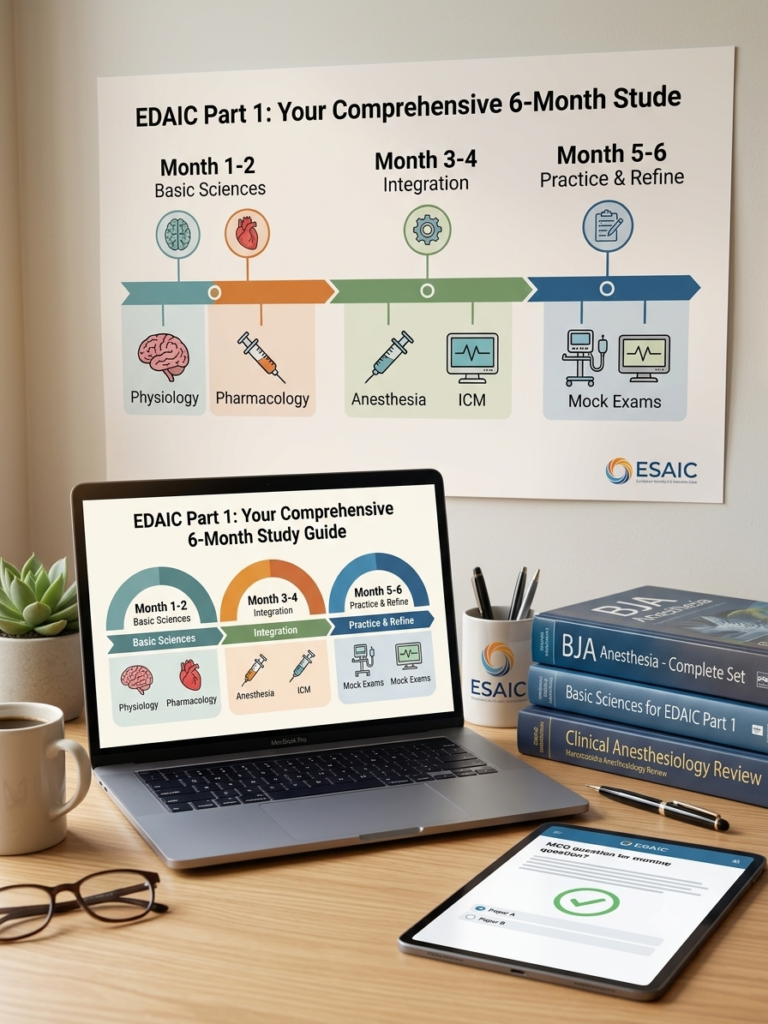
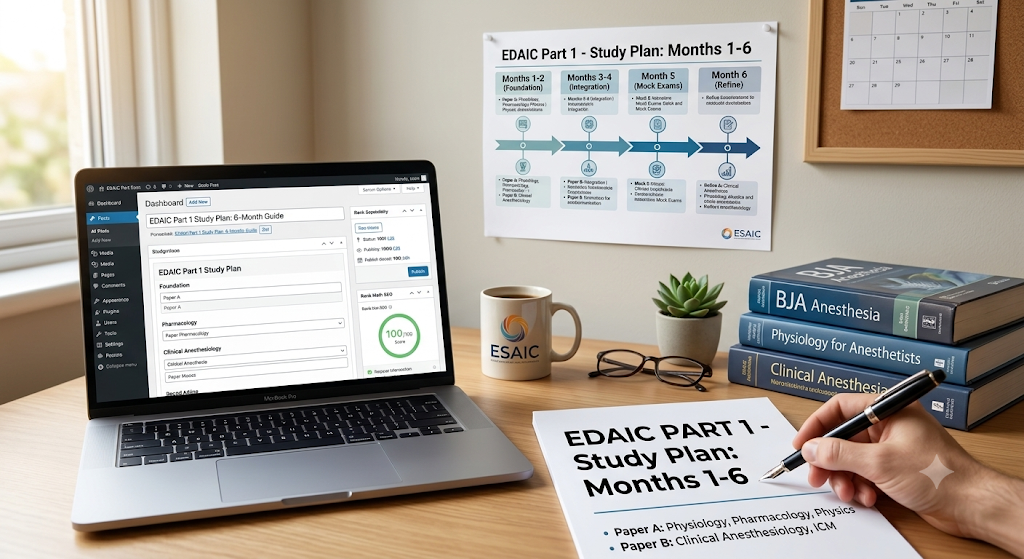
Months 1–2: Build the foundation
Start with Paper A basic sciences, even if Paper B feels more comfortable. Physiology and pharmacology take the longest to truly absorb, and rushing them later causes the most last-minute panic.
- Read one core topic per week (cardiovascular physiology, respiratory physiology, renal physiology, etc.)
- Do untimed practice questions on that topic immediately after reading — not days later
- Keep a running list of concepts you get wrong twice; this becomes your revision list later
Months 3–4: Shift into clinical topics and start mixing
Move into Paper B clinical anesthesiology alongside continued Paper A review. This is also when physics and statistics should get dedicated blocks — they’re small syllabus sections but consistently under-prepared.
- Alternate days between Paper A and Paper B topics rather than finishing one completely before starting the other
- Begin timed practice sets, even short ones, to build exam-pace habits early
- Revisit your “wrong twice” list weekly
Month 5: Full-syllabus practice
By now you should have touched every major topic at least once. This month is about testing yourself across the whole syllabus, not learning new material.
- Full-length timed mock exams, one every 7–10 days
- Review every wrong answer the same day, not the next week
- Identify 3–4 weak topics and give them dedicated re-reads
Month 6: Consolidation, not new material
Resist the urge to start new content this late. The exam rewards recall speed and confidence more than raw new knowledge at this stage.
- Final mock exams under real time pressure
- Rapid review of your accumulated weak-topic list
- Light review only in the final week — protect your sleep and mental energy
Common mistakes that derail this timeline
Starting Paper B first because it feels easier — Paper A physiology/pharm needs the most runway Skipping physics and stats until the final month — they’re small but high-yield, and cramming them late causes disproportionate stress Doing only untimed questions — timed practice is a separate skill from knowledge recall, and needs its own practice window
Final thought
Six months is enough time for EDAIC Part 1 if it’s structured, not if it’s spent hoping momentum carries you through. The residents who struggle most aren’t the ones who knew less — they’re the ones who ran out of runway to convert knowledge into exam-day speed.