“Finding the best anesthesia textbooks for residents can feel overwhelming when starting your training. With so many references available, focusing on high-yield, comprehensive textbooks is crucial for mastering clinical concepts and passing exams.”
When starting an anesthesia residency, choosing the right study resources can feel overwhelming. With so many references available, focusing on high-yield, comprehensive textbooks is crucial for mastering clinical concepts and passing exams like the EDAIC or board certifications.
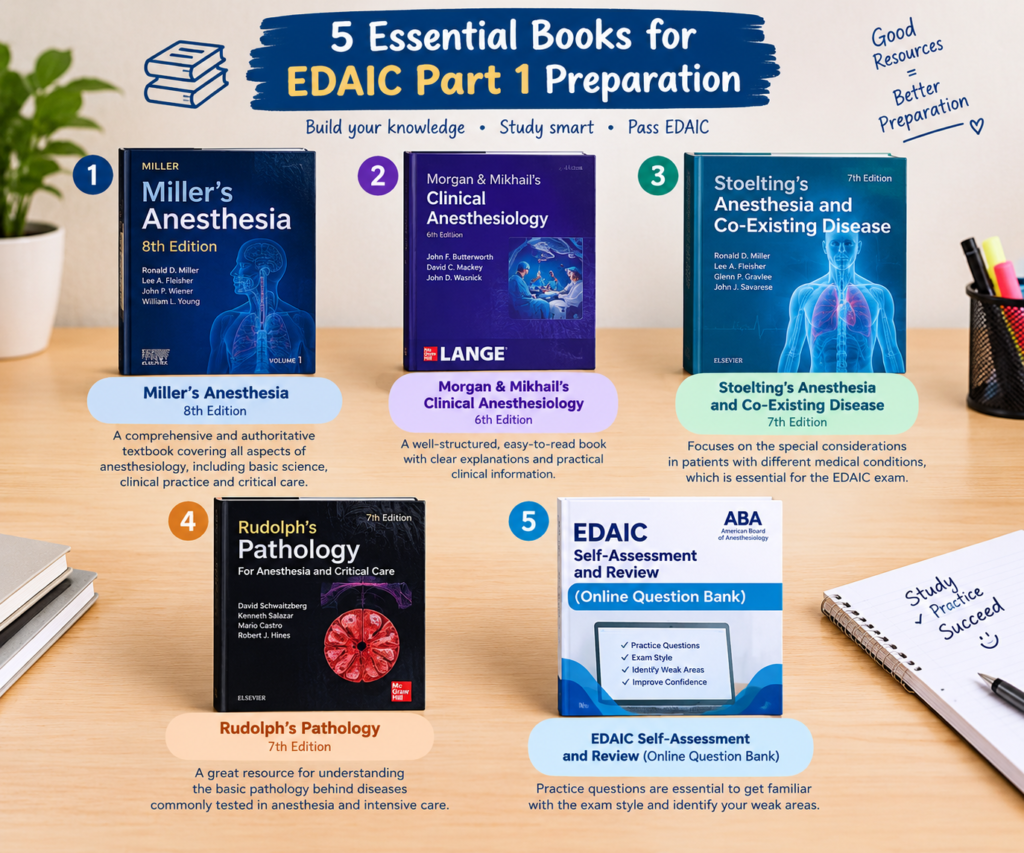
Here are the 5 essential anesthesia textbooks that every resident and trainee should have in their reference library:
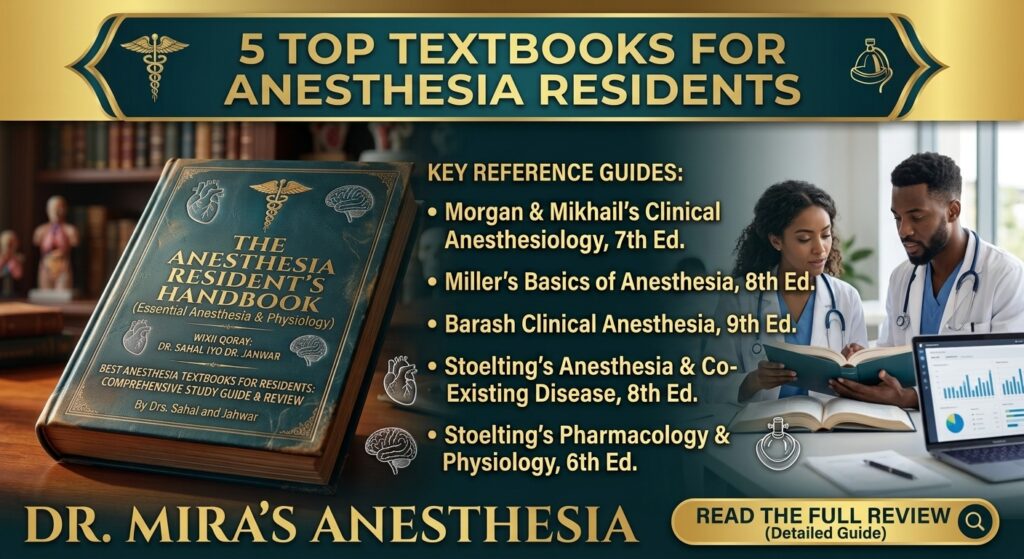
Table of Contents
1. Clinical Anesthesiology by Morgan and Mikhail
- Best For: Core principles and daily clinical preparation.
- Why You Need It: Widely regarded as the gold standard for residents, Morgan & Mikhail’s Clinical Anesthesiology provides concise, easy-to-read explanations of basic science, clinical pharmacology, and intraoperative management.
- Key Features: Key Concepts boxes, excellent visual diagrams, and bulleted summaries for quick review before cases.
- Check Price on Amazon
2. Miller’s Basics of Anesthesia
- Best For: Foundation building and core knowledge.
- Why You Need It: Often referred to as “Baby Miller,” this textbook breaks down complex anesthesia concepts into digestible chapters without compromising depth.
- Key Features: Outstanding coverage of pediatric, obstetric, and cardiac anesthesia basics with high-yield summary tables.
- Check Price on Amazon
3. Barash’s Clinical Anesthesia
- Best For: In-depth research, comprehensive reference, and board preparation.
- Why You Need It: When you need comprehensive details on rare conditions, advanced pharmacology, or complex surgical procedures, Barash is the definitive text.
- Key Features: Step-by-step procedure guides, evidence-based management algorithms, and clinical pearls.
- Check Price on Amazon
4. Stoelting’s Anesthesia and Co-Existing Disease
- Best For: Preoperative evaluation and systemic pathophysiology.
- Why You Need It: Managing surgical patients with multiple comorbidities is a core skill in anesthesia. Stoelting covers how systemic diseases affect anesthetic care.
- Key Features: Organized by body system, concise disease summaries, and clear anesthesia management considerations.
- Check Price on Amazon
5. Pharmacology and Physiology in Anesthetic Practice (Stoelting)
- Best For: Physiology and basic science preparation.
- Why You Need It: A deep understanding of pharmacokinetics, pharmacodynamics, and cardiovascular/respiratory physiology is essential for safe practice and exams.
- Key Features: Clear drug interaction tables, mechanism of action diagrams, and detailed physiological graphs.
- Check Price on Amazon
Why You Need the Best Anesthesia Textbooks for Residents
Investing in the right reference materials early in your training builds a strong foundation for clinical practice and board examinations. Whether you prefer the concise structure of Morgan & Mikhail or the comprehensive depth of Barash, these books are indispensible resources for any trainee.
How to Choose the Right Anesthesia Reference for Your Training
Selecting the ideal study material depends largely on your current clinical level and learning goals:
- For Daily Clinical Practice: Start with Morgan & Mikhail. It offers the most practical, quick-reference format for intraoperative decision-making and case preparation.
- For Comprehensive Exam Prep: Barash and Stoelting provide the necessary pathophysiology and evidence-based depth required for major written and oral board examinations.
- For Active Recall Study: Pair these textbooks with structured Anki flashcard decks or active recall routines to reinforce drug dosages, mechanism of actions, and anatomical block landmarks.
By investing in these foundational resources early in your residency, you build a reliable knowledge base that will serve you throughout your anesthesia career.nhu7kn