As an Amazon Associate I earn from qualifying purchases. This means I may earn a small commission if you buy through my links, at no extra cost to you.
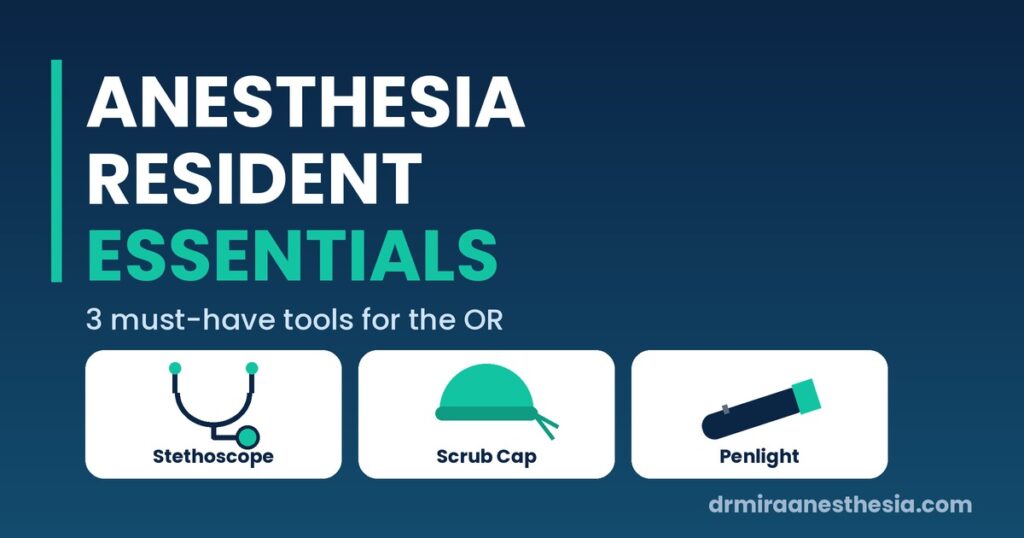
Anesthesia resident essentials are the few tools you will reach for every single day, in the OR and on the wards. Starting residency, you quickly learn that the right gear makes long shifts easier. You don’t need a bag full of gadgets. These three items are the ones residents use daily, and each is worth the money.
Starting anesthesia residency, you quickly learn that the right tools make long OR days easier. You don’t need a bag full of gadgets. These three items are the ones residents use every day, and each is worth the money.
Why These Anesthesia Resident Essentials Matter
Anesthesia is a hands-on specialty with long, unpredictable days. One minute you are assessing a patient before surgery, the next you are checking pupils or listening to breath sounds in recovery. Carrying your own reliable tools saves time and means you are never waiting to borrow equipment from a colleague. It also helps you stay organized in your first months, when everything else feels new. The three anesthesia resident essentials below are inexpensive compared with the cost of textbooks and exams, and they will serve you throughout training.
Table of Contents
1. Littmann Classic III Stethoscope
Best for: Daily clinical use, from pre-op assessment to the ICU.
A good stethoscope is the one piece of equipment you’ll carry through your whole career. The Littmann Classic III is one of the most widely used models among doctors, and for good reason.
Why residents choose it:
- Dual-sided chestpiece for both high and low frequency sounds
- Clear, reliable sound for heart and lung assessment
- Durable build that lasts for years
- Comfortable ear tips for long shifts
- Available in many colors, so yours is easy to tell apart from a colleague’s
Things to consider:
- It costs more than basic stethoscopes, but it is an investment you will use for years.
- Label it with your name. Stethoscopes go missing in busy hospitals.
Who should buy it: Any resident or medical student who wants one reliable stethoscope for training and beyond.
2. Surgical Scrub Cap
Best for: Daily wear in the operating room.
In anesthesia you spend your day in the OR, so a comfortable scrub cap matters more than people expect. A good one stays in place, absorbs sweat and is easy to wash.
What to look for:
- Breathable fabric that keeps you cool under OR lights
- Adjustable fit (elastic or tie-back) so it doesn’t slip
- Machine washable material, so you can rotate several caps
- Dark or simple colors that hide stains
Tip: Buy two or three. Hospital policy requires a clean cap for every shift, and laundry days happen.
3. Pocket Penlight
Best for: Pupil checks, airway assessment and neuro exams.
A penlight is small, cheap and easy to forget until you need it. Anesthesia residents use it constantly, from checking pupils to looking at the oropharynx during the pre-op airway exam.
What to look for:
- Bright, white light (not yellow)
- Pocket clip so it stays on your scrubs
- Replaceable batteries or a rechargeable design
- A sturdy metal body that survives drops
Tip: Keep a spare in your locker. Borrowed penlights rarely come back.
Quick Comparison
| Item | Best For | Priority |
|---|---|---|
| Littmann Classic III | Everyday clinical assessment | Buy first |
| Scrub Cap | OR comfort | Buy second |
| Penlight | Pupil and airway checks | Buy third |
Build Your Anesthesia Resident Essentials Kit Step by Step
You don’t need to buy everything in your first week. Start with the stethoscope, add a penlight when you begin airway rotations, and pick up scrub caps as you learn which style you like. For guidance on training and professional development, the American Society of Anesthesiologists has helpful resources for residents.
Final Thoughts
If you can only buy one item, start with the stethoscope. It’s the tool you’ll rely on most, for the longest time. Add a couple of scrub caps and a penlight, and you’re set for your first months of residency.
Are you also preparing for your board exams? Check out my guides on the best anesthesia review books for FRCA, EDAIC and ABA candidates.
Disclosure: As an Amazon Associate I earn from qualifying purchases.